



Areas of Concern in the Maintenance and Repair Industry
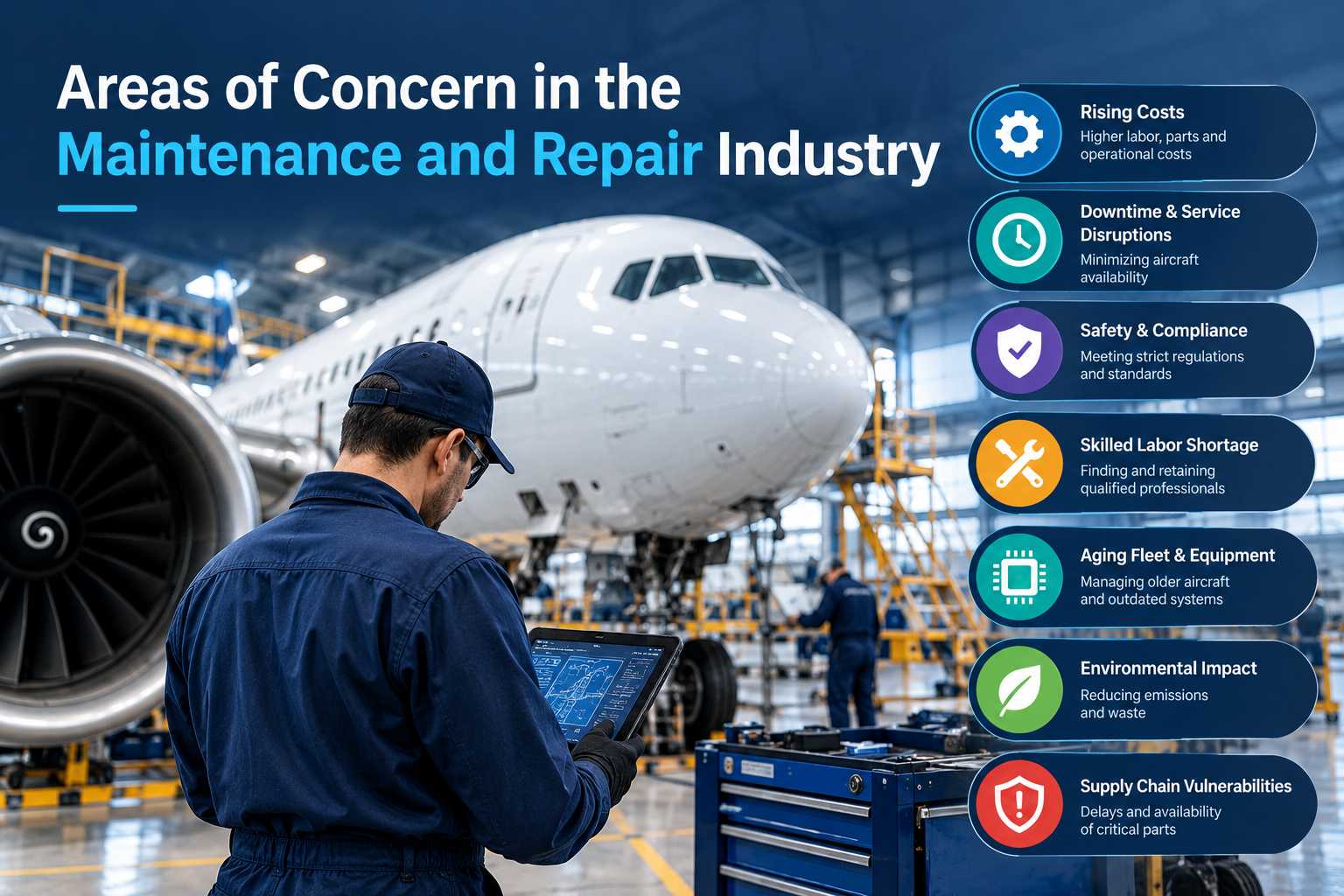
The maintenance and repair industry is responsible for the upkeep and repair of aircraft, ensuring their safety and reliability. Does the pandemic continue to impact the industry? Labor shortages, inflation, growing environmental concerns—what worries industry players the most? In this article, we will discuss their primary concerns for the fourth quarter of this year.
Rising Material and Labor Costs
According to an Oliver Wyman report, 97% of survey respondents cite rising raw material costs as a source of concern—a trend they largely attribute to aircraft manufacturers. As things stand, this trend is likely to continue.
Labor Shortages
Labor costs are also rising, driven by a labor supply shortage resulting from an aging workforce combined with a dwindling supply of new graduates. This trend is also expected to persist. The highest wages are found in Western Europe, while the lowest are in China and Latin America. As the Oliver Wyman report indicates, we are operating in a highly competitive global market.
Increased Expansion by Manufacturers
The growing presence of manufacturers in the aftermarket sector is a significant development. Companies like Airbus and Boeing have set highly ambitious goals for themselves. Airbus aims to double its aftermarket spending by 2035, reaching a total of $1.8 trillion—representing an annual growth rate of 4.6%.
Similarly, Boeing has set a goal to triple its maintenance and repair revenue over the next decade. The ability of manufacturers to rapidly capture market share in the aftermarket is largely due to the retention of intellectual property rights—a factor that applies primarily to engine and component manufacturers.
Financial Challenges
The maintenance industry is capital-intensive; companies require significant investment in equipment and training to remain competitive. Although the pandemic has passed its peak, it has significantly impacted the financial health of maintenance companies.
Technological Advancements
The aviation industry is constantly evolving, with new technologies and processes regularly emerging. Maintenance companies must keep pace with these advancements to stay competitive. However, the cost of implementing new technology can be a concern for these companies, particularly smaller ones. Furthermore, the need for industry standards regarding new technology can create uncertainty and additional costs.
Sustainability
According to the Sixth Assessment Report on climate change, drastically reducing greenhouse gas emissions requires ambitious planning and investment in zero-carbon fuels.
In this context, the aviation industry faces mounting pressure to address environmental concerns, and maintenance companies are no exception. Industry players must comply with regulatory requirements while balancing the need for sustainability with profitability. Many maintenance companies are investing in sustainable practices to reduce their environmental impact. Supply Chain Disruptions
Maintenance companies rely on global supply chains for parts and materials, and disruptions can impact their operations. As demonstrated during the pandemic, unforeseen events expose the vulnerabilities of the aviation supply chain. For many players in the maintenance industry, parts shortages have become a critical issue. Maintenance companies must adopt new strategies to build a more resilient supply chain and mitigate the impact of disruptions.
Regulatory Compliance
Maintenance companies must adhere to a complex set of regulations governing the aviation industry. Compliance costs can be significant, particularly for smaller companies with limited resources. Furthermore, these regulations are subject to frequent changes, imposing additional costs on maintenance companies as they strive to keep pace with the latest requirements.
Cybersecurity
Cybersecurity has become a global issue. Experts estimate there are around 300,000 professional hackers worldwide, costing the global economy more than half a trillion dollars annually.
While maintenance companies may represent just one potential entry point, their position within the airline supply chain makes them a significant target for causing serious damage. Ultimately, maintenance companies must evaluate their cybersecurity—not only for their own sake but also for the benefit of the industry and the global economy.
Geopolitical Instability
Geopolitical instability can pose significant challenges for the maintenance industry. The landscape can shift unexpectedly. More severe events—such as sanctions, trade disputes, and changes in regulations and trade policies—can continue to impact the global supply chain and disrupt the operations of maintenance facilities.
In the face of these disruptions, maintenance providers must remain flexible to adapt to shifts in the political and regulatory landscape. This may require them to establish new supplier relationships, expand operations into new regions, or adjust their business strategies to align with changing market conditions.
Aging Aircraft
The average age of the global commercial aircraft fleet is rising, and maintenance companies must adapt to the evolving needs of their customers.