



Human Factors: The Pillar of Safety in Maintenance
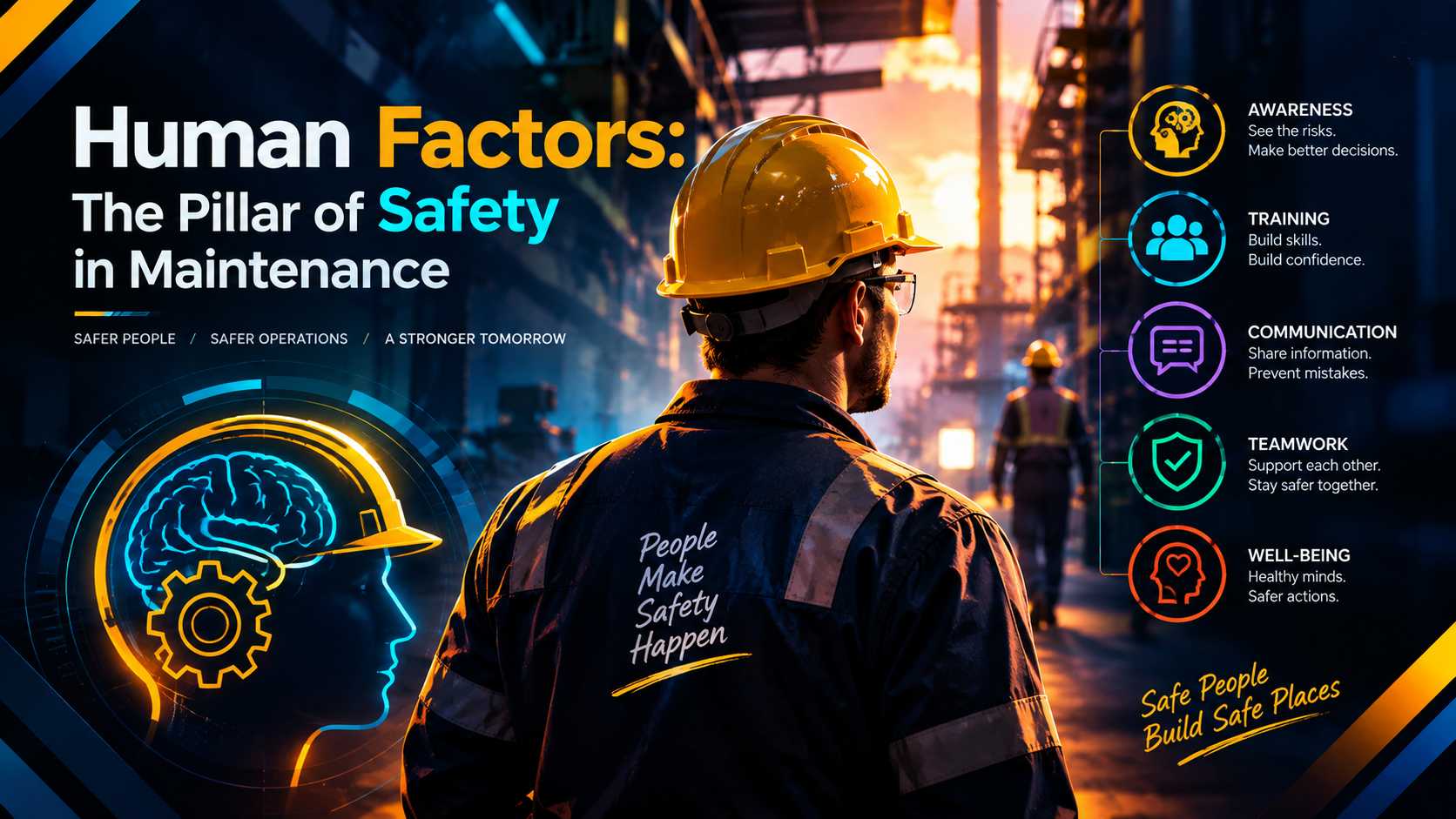
Alongside technology and regulations, safety stands as the ultimate imperative in the world of aviation maintenance. Yet, human factors—while critical to maintenance safety—are often, if not always, easily overlooked. Leading companies such as Boeing, Airbus, Embraer, Bombardier, and Bell place a strong emphasis on safety, introducing innovative concepts to protect their engineers and technicians while ensuring aircraft remain airworthy for extended periods.
Experts have consistently highlighted the importance of human factors in maintenance safety. You have likely heard stories of maintenance technicians identifying critical engine defects during routine servicing, thereby averting potential disasters just before a flight. Their work is, therefore, an essential component of aviation safety.
Conversely, there have been reports of human factor errors triggering in-flight emergencies and endangering the lives of passengers and crew. Such errors often stem from gaps in training programs and the complexities of human involvement in maintenance operations.
Human factors in maintenance safety encompass several key aspects:
Training and Skill Development: Maintenance technicians undergo rigorous training to acquire technical proficiency. However, continuous training programs focusing on human factors—such as decision-making under pressure, communication during stressful situations, and error prevention—are equally vital. State-of-the-art simulation technologies now provide training environments where technicians can master these human factors, enabling them to handle real-world scenarios with precision and composure. Fatigue Management: Fatigue poses a significant threat to aviation safety. It arises from long working hours, irregular shifts, and heavy workloads. Fatigue impairs the cognitive skills and decision-making abilities of maintenance personnel. Implementing fatigue risk management systems, establishing optimal rest periods, and fostering a culture of fatigue awareness are essential steps toward mitigating fatigue-related risks and enhancing overall safety in maintenance operations.
Communication and Teamwork: Effective communication and seamless teamwork are pillars of safety in maintenance environments. Clear communication channels, proper procedures, and mutual cooperation foster a culture of transparency and accountability. Robust communication protocols are crucial, particularly during critical maintenance tasks or emergency situations.
Human-Machine Interface: With the increasing digitalization and automation of maintenance operations, the human-machine interface plays a vital role in ensuring efficiency and safety. User-friendly interfaces, ergonomic designs, and intuitive workflow systems enable maintenance technicians to navigate complex technological environments. Striking a balance between automation and human oversight is critical; over-reliance on automation can lead to complacency and a loss of situational awareness.
Continuous Improvement and Learning Culture: Organizations must embrace a culture of continuous improvement and learning. Safety audits, incident reporting mechanisms, and feedback loops enable organizations to proactively identify potential human factor challenges. A culture that encourages open dialogue, learning from past incidents, and the implementation of corrective actions fosters a resilient and dynamic safety culture. It is evolving and adapting.
Consequently, human factors constitute the core of safety in aviation maintenance, underpinning every maintenance operation and ensuring passenger confidence and trust. Human factors continue to play a pivotal role in shaping the future safety landscape of aviation maintenance.