



Warehouse Inventory Management in the Maintenance and Repair Industry
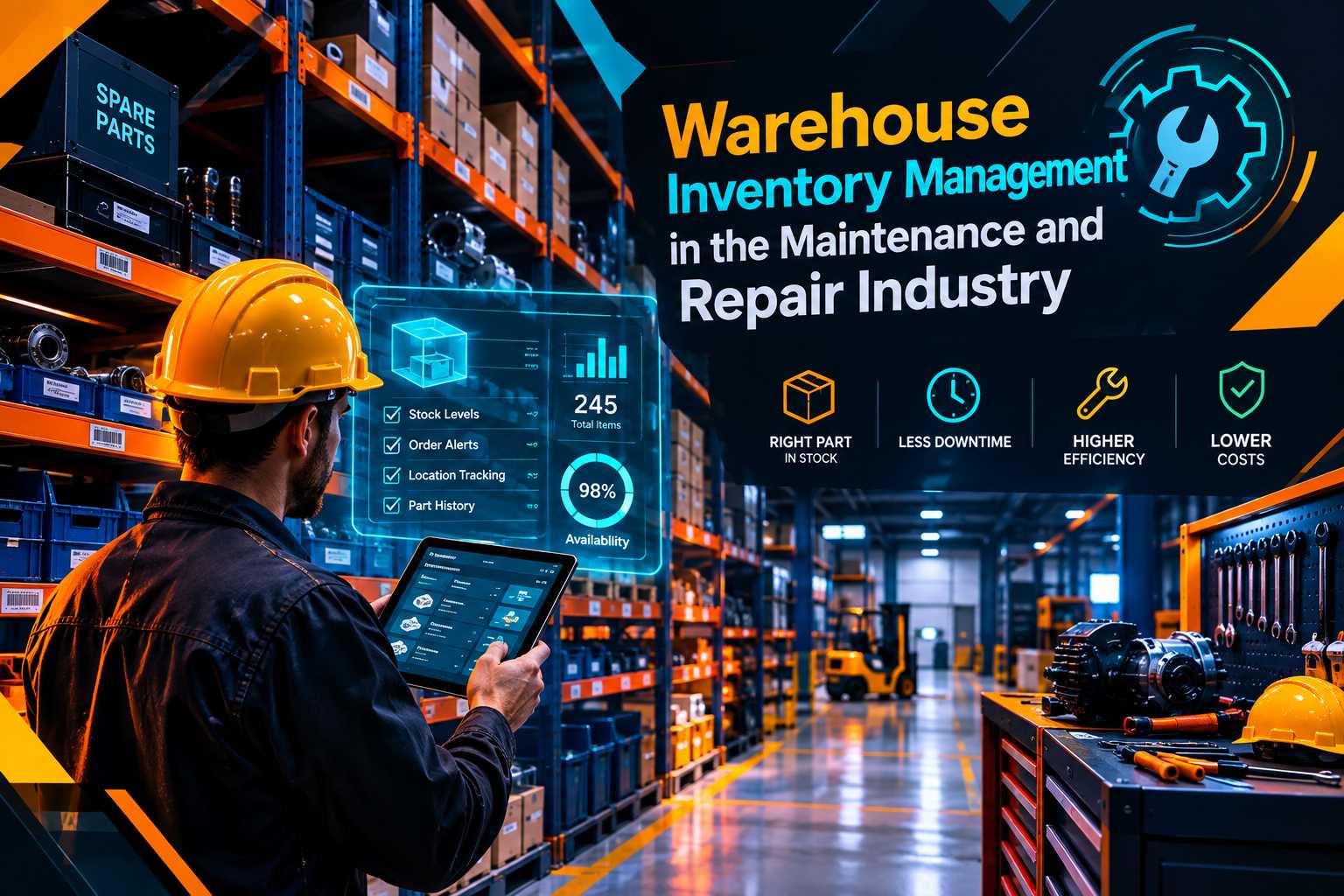
Most maintenance companies need to maintain a stock of spare parts, supplies, and other materials that support their business operations. These companies require readily available parts and tools to perform quick repairs and keep operations running smoothly.
Collectively, these items are known as maintenance inventory. Since inventory can account for a significant portion of a company’s total procurement costs, implementing efficient inventory management processes is crucial to minimizing expenses while ensuring the company has sufficient stock to meet its needs.
What is maintenance?
Maintenance refers to all activities required to sustain a company’s facilities and operational processes. The Boston Consulting Group indicates that maintenance costs can reach up to 4.5% of revenue in certain industries; therefore, reducing these costs can have a significant impact on the final price of products or services.
What is maintenance inventory?
Maintenance inventory comprises the consumables, equipment, and supplies needed for maintenance, repair, and operational activities. It includes items used during a process that—unlike raw materials—are not incorporated into the company’s final products. Spare parts and tools used for equipment repair fall under this category. Maintenance inventory affects the productivity of virtually every department, making it essential to maintain adequate stock levels for business operations.
Examples of maintenance inventory
Maintenance inventory encompasses a wide range of equipment and supplies. Such as:
Machinery maintenance and repair supplies: lubricants, light bulbs, valves, and spare parts.
Safety equipment: masks, earplugs, hard hats, respirators, and face shields.
Janitorial supplies: disinfectant and cleaning sprays, liquids and powders, buckets, brooms, dust cloths, and disposable gloves.
Office supplies: personal computers, printers and toner, furniture, paper, pens, and pencils.
Laboratory supplies for testing or research: beakers, syringes, test tubes, and scales.
What is warehouse inventory management?
Warehouse inventory management entails the purchasing, storing, using, and replenishing of all products included in the inventory list. As with other types of inventory management, the goal is to carry out each of these activities as efficiently and cost-effectively as possible so that the business has the right inventory available at the right time and at the right cost. Warehouse inventory management can be complex and time-consuming, as companies may need to purchase and store hundreds or even thousands of different items.
Why is warehouse inventory management important?
Warehouse inventory management plays a crucial role in maintaining business operations. For instance, if a vital machinery component fails during a production run, the entire process could grind to a halt. Without a spare part readily available, this setback could result in hours or even days of downtime. If the downtime exceeds contractual delivery deadlines, a business could lose revenue and jeopardize customer relationships. It is easy to see how improper management of warehouse items can have a major impact on your entire supply chain. On the other hand, stockpiling inventory to prevent stockouts can also create problems: purchasing and storing excess inventory ties up capital that could otherwise be used to fund business growth. Furthermore, certain items may become obsolete if stored for too long.
Inventory Management Challenges
Companies often underestimate the importance of inventory management, despite its complexity, cost, and impact on operations. Historically, some firms have treated inventory management as an afterthought, paying insufficient attention to its oversight. The task becomes significantly more difficult—and fraught with challenges—when inventory management is fragmented and different departments purchase their own supplies. These challenges include:
Excessive Purchasing: Without a centralized and efficient procurement process, the cost of purchasing thousands of different items—many of low value—can exceed the cost of the items themselves. One study estimated that every $1 million in inventory spending can generate 3,500 purchase order cycles, each requiring a separate purchase order, invoice, and receipt. Additionally, highly paid technicians may spend their time searching through parts catalogs rather than performing maintenance work.
Redundant and Uncontrolled Costs: Different departments may independently stock up on the same items to ensure they have sufficient inventory to meet their needs. This can occur even when a formal procurement process is in place, particularly if departments feel the process fails to deliver the necessary supplies quickly enough. Such duplication of effort and inventory drives up overall purchasing and storage costs.
Inventory Tracking: Without a centralized inventory management system, companies may remain unaware of the actual availability of specific items. One department might assume an item is out of stock, when in reality, another department has already allocated it for its own needs. If the items in question are critical—such as spare parts for equipment repair—such oversights can have serious consequences for the business.
Poor visibility into demand, combined with an inability to monitor overall inventory consumption, prevents companies from accurately forecasting, budgeting, and planning to meet demand.